
I’ve tried to practice this for sometime (and presumably the screenwriters from whom I learned it have too). After all, movies and TV are comprised of sound and vision, so put that sound and vision on the page and — Voilà — Got Movie or TV show. No wonder people say writing is easy.
But a question a writer posted on Twitter asking for advice on writing combat scenes made me think about this simple idea again. Sure, put what you see on the screen-in-your-head on the page, BUT in how much detail?
There’s something about fight scenes that makes this question of detail so pertinent. I think this is because fight scenes have a lot of specific actions — like POW and THWACK — and maybe also because while these pows and thwacks are happening there’s generally not a lot story happening (however, as the example below shows, a fight scene might have reveals in it).
In any case, what’s clear is that if you write too much detail in a fight scene there’s a danger of BORING the reader. And if there are any hard and fast rules of screenwriting that’s one of them — Don’t bore the reader. BUT at the other end of the spectrum too little detail, say for example — “Bobby and Larry fight.” — means you probably won’t capture what’s on the screen (although the brevity of this description pulls at me).
So you want a balance of enough detail to show what’s on the screen — what’s happening and the feel or tone of what’s happening, but not so much you bore the reader.
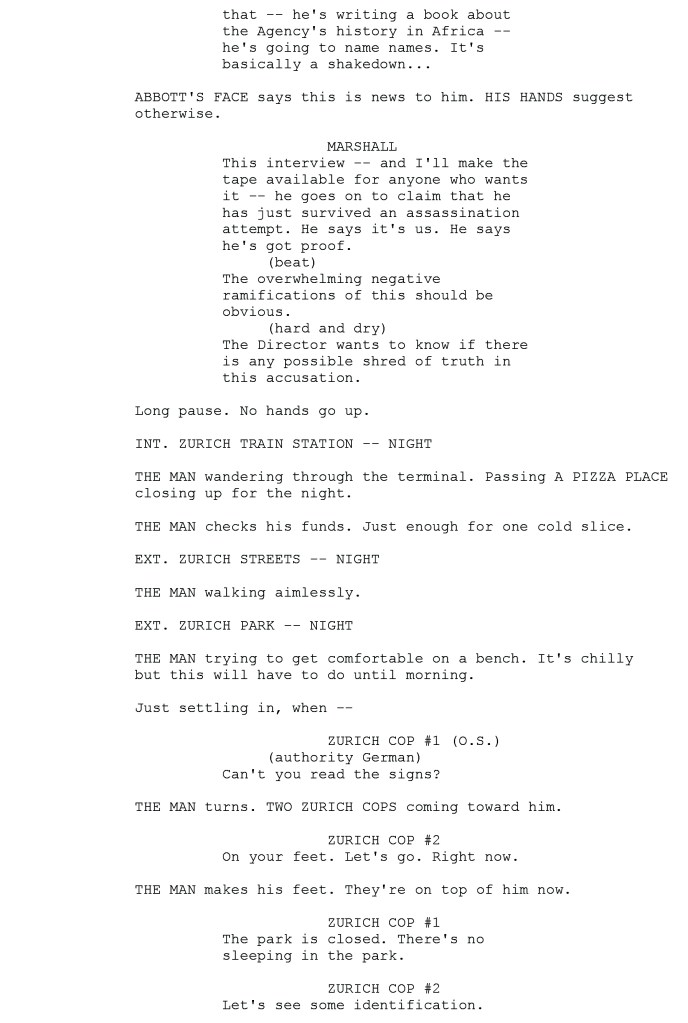
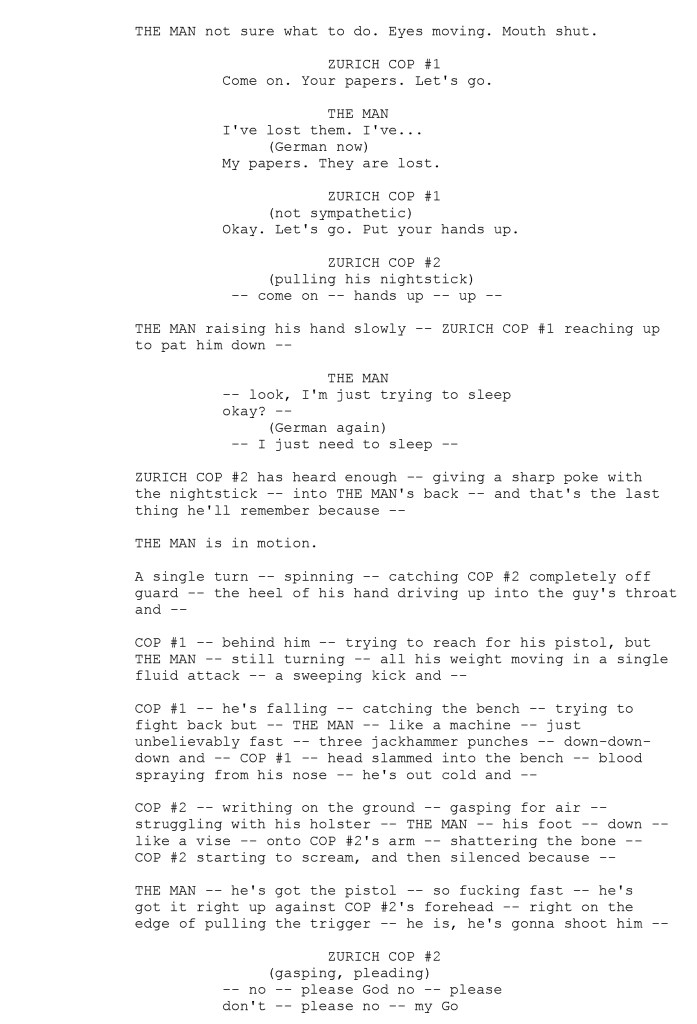
And to keep from boring you, I’m going to cut to an excellent example of this balance from Tony Gilroy’s Bourne Identity. Scroll down to EXT. ZURICH PARK – NIGHT for the fight scene:
_______________________________________
_______________________________________
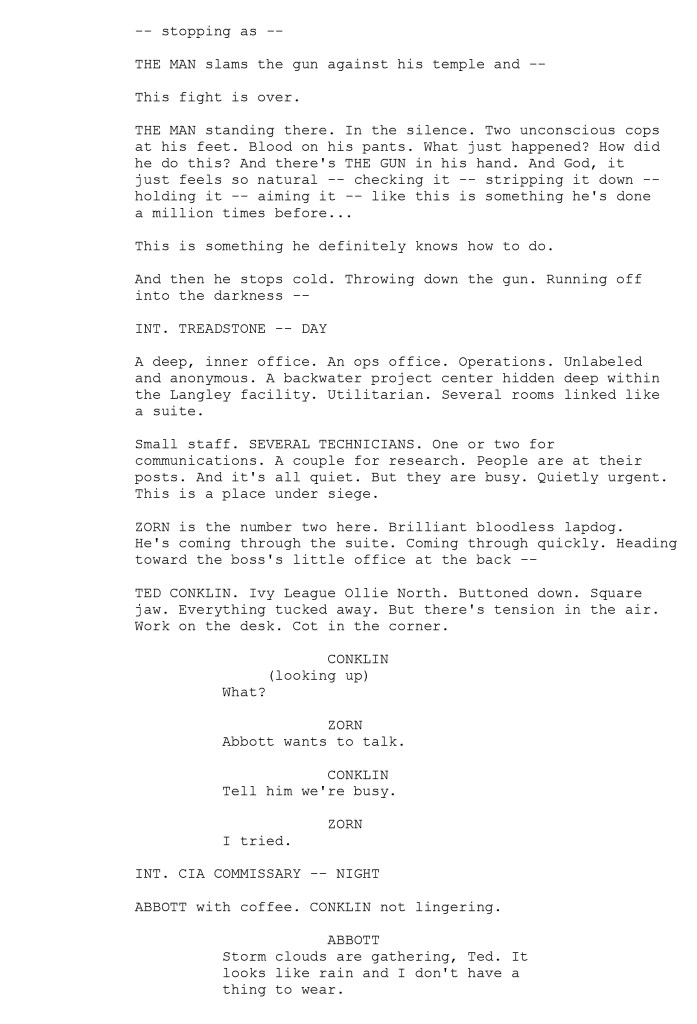
Mostly, I’m going to let this scene speak for itself. Look at what the writer does and how he does it. But I’ll mention a few things I notice about it. There are specific actions described in enough detail to tell us the important stuff that is on the screen, namely that THE MAN is a fighting machine, and he’s surprised by this fact. Gilroy also mixes in a couple of similes to bring home the feel of what’s happening — like a jackhammer — like a vise — and also describes how The Man reacts or feels about this newly discovered skill he has, which gives us a great reveal about his character and adds interest and a point to the fight. Finally, the way he lays the words on the page gives us the feel of pace and tone of the fight.
In short, when I read this, I see what’s on the screen in just the right amount of detail. So here we are again — put on the page what you want to see on the screen.
 Charlie Lyons Writes